Measured Extraction
The weight you carry in your pocket
Github Repository
Introduction
This project began with a simple question. What is actually inside the device most of us carry everywhere? Measured Extraction is an interactive installation that makes that question physical. Visitors are invited to place their smartphone on a scale, and watch how the scale reacts. The work draws on research into mineral extraction, industrial machinery, and the invisible material weight embedded in everyday technology.
Concept and Background Research
It is fair to say that most people today carry a smartphone in their pocket. As of 2025, over 6.9 billion people worldwide are estimated to use smartphones (Adika, 2025). Like other electronic devices like computers, cars, and all kinds of machinery, smartphones rely on minerals that provide essential electrical and structural properties (Critical Minerals in Smartphones, no date). On average, a smartphone uses 75 of the 81 stable elements in the periodic table (The Geological Society of London, 2023) (Figure 1.1). These raw materials are extracted from different parts of the earth and refined before being installed in a finished device, yet most of us have no real sense of the scale of metals and minerals involved. As Bratton (2015) observes, billions of people now carry traces of Africa in their pockets, a provocation that captures precisely what this project set out to make visible. The vast, largely unseen mining industry that underpins every device we treat as ordinary.

Figure 1.1. A poster showing the sources of minerals

Figure 1.2. Neodymium—One of the minerals used in phones which is magnetic
Mineral extraction is carried out by digging enormous open pits into the earth's surface. Some of them are so large that they are visible from space. What particularly struck me was the Bagger 293, a bucket-wheel excavator, the largest land vehicle ever built. Its vast rotating wheel of scooping buckets makes the sheer scale of the mining industry, and the global demands of raw materials for technology visible.

Figure 3. Bagger 293 from far

Figure 4. Bagger 293 scale

Figure 5. Bingham Canyon mine
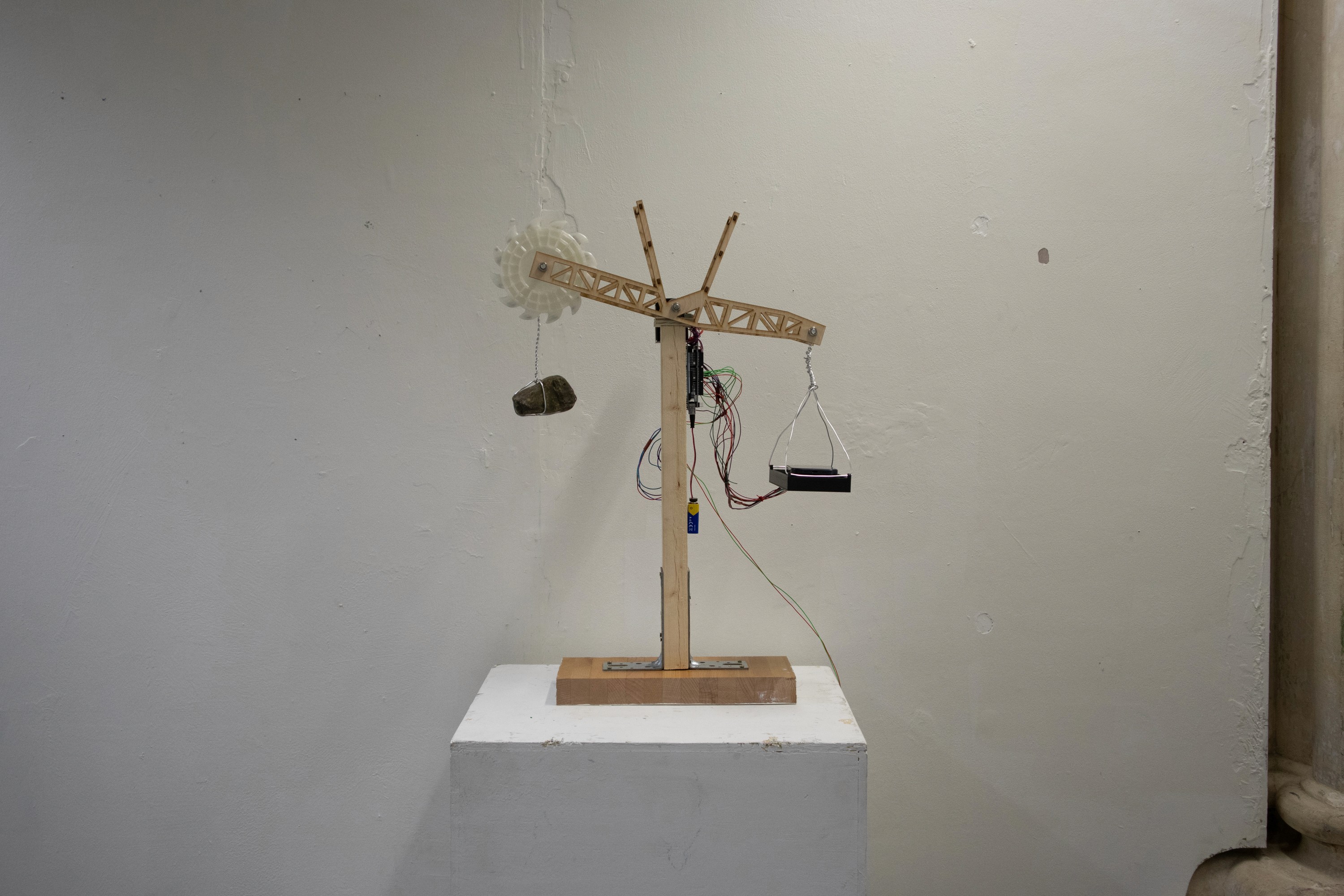
Based on this research and critical reflection, I decided to create an interactive scale installation. It takes the form of a traditional weighing scale. On one side, a rock hands as a counterweight, on the other side, a tray is provided for visitors to place an object. The visitor is invited to take their smartphone out of their pocket, place it on the tray, and observe what happens.
Unexpectedly, the rock slowly rises whilst the smartphone descends. This inverted movement reflects the density of minerals extracted from the earth and embedded within the device. The movement is controlled by a geared stepper motor, and the degree of movement is determined by readings from magnetic sensors installed beneath the tray.
Technical Implementation
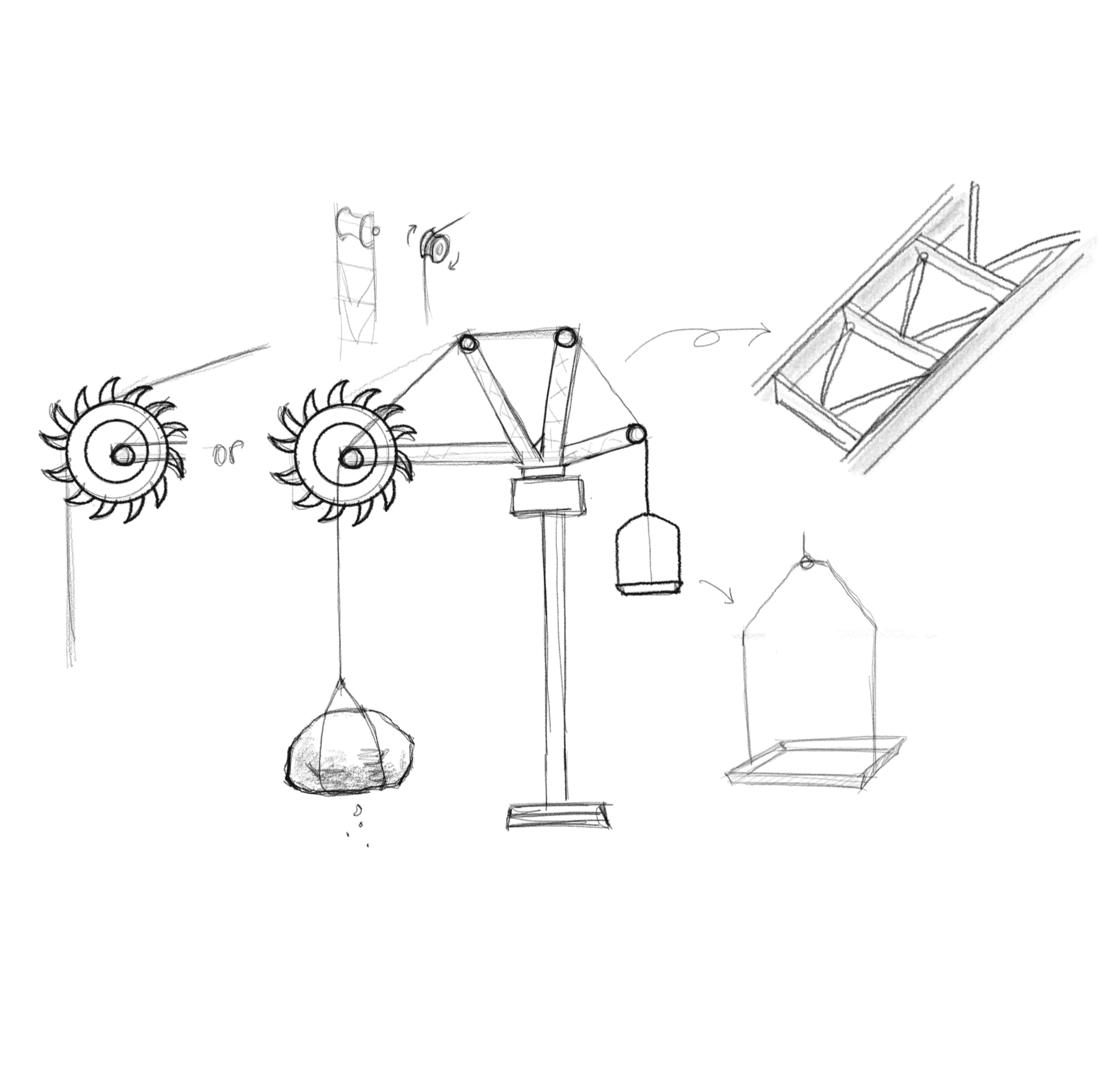
Figure 2.1. Structure sketch
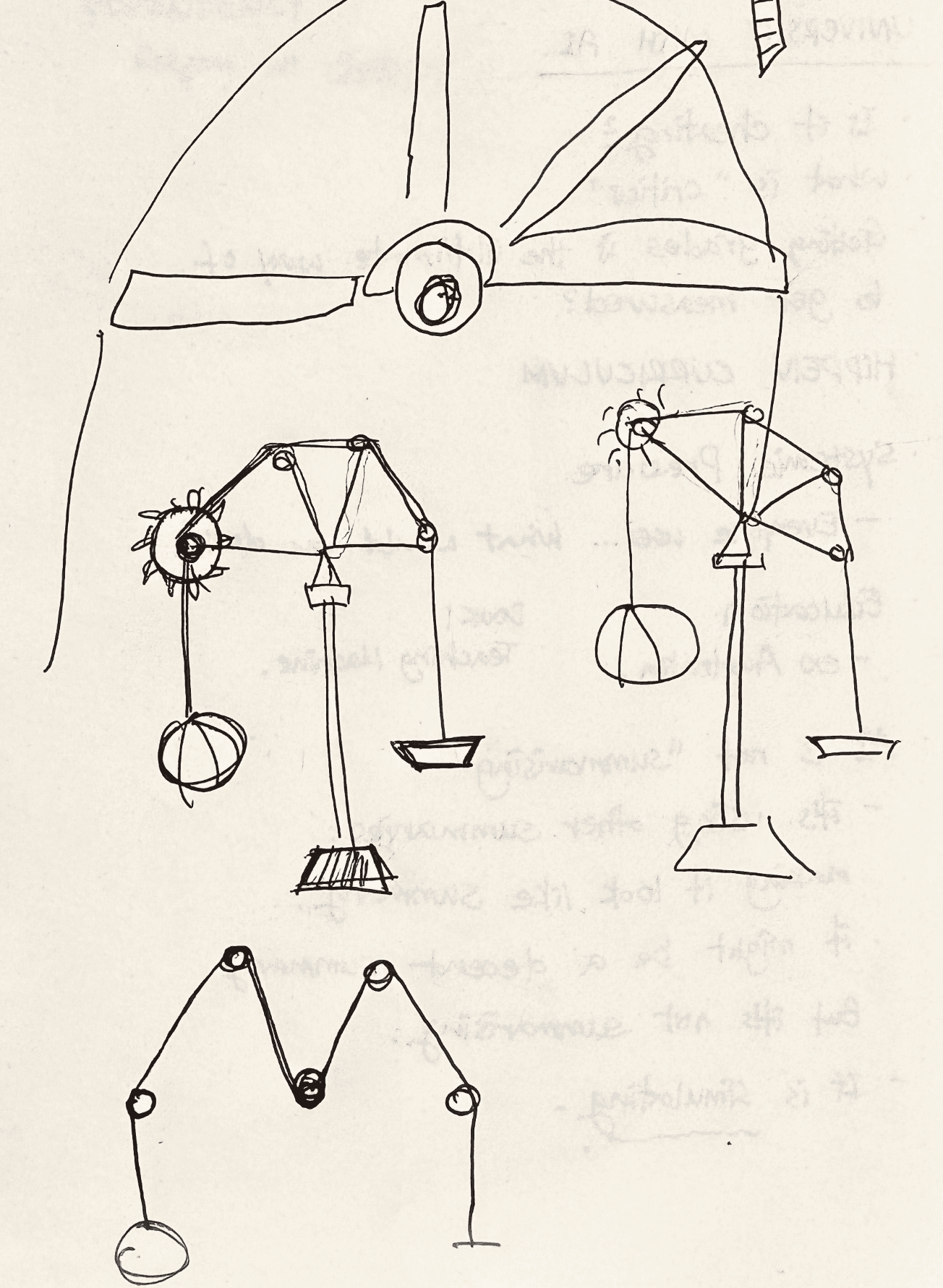
Figure 2.2. Arm design sketch
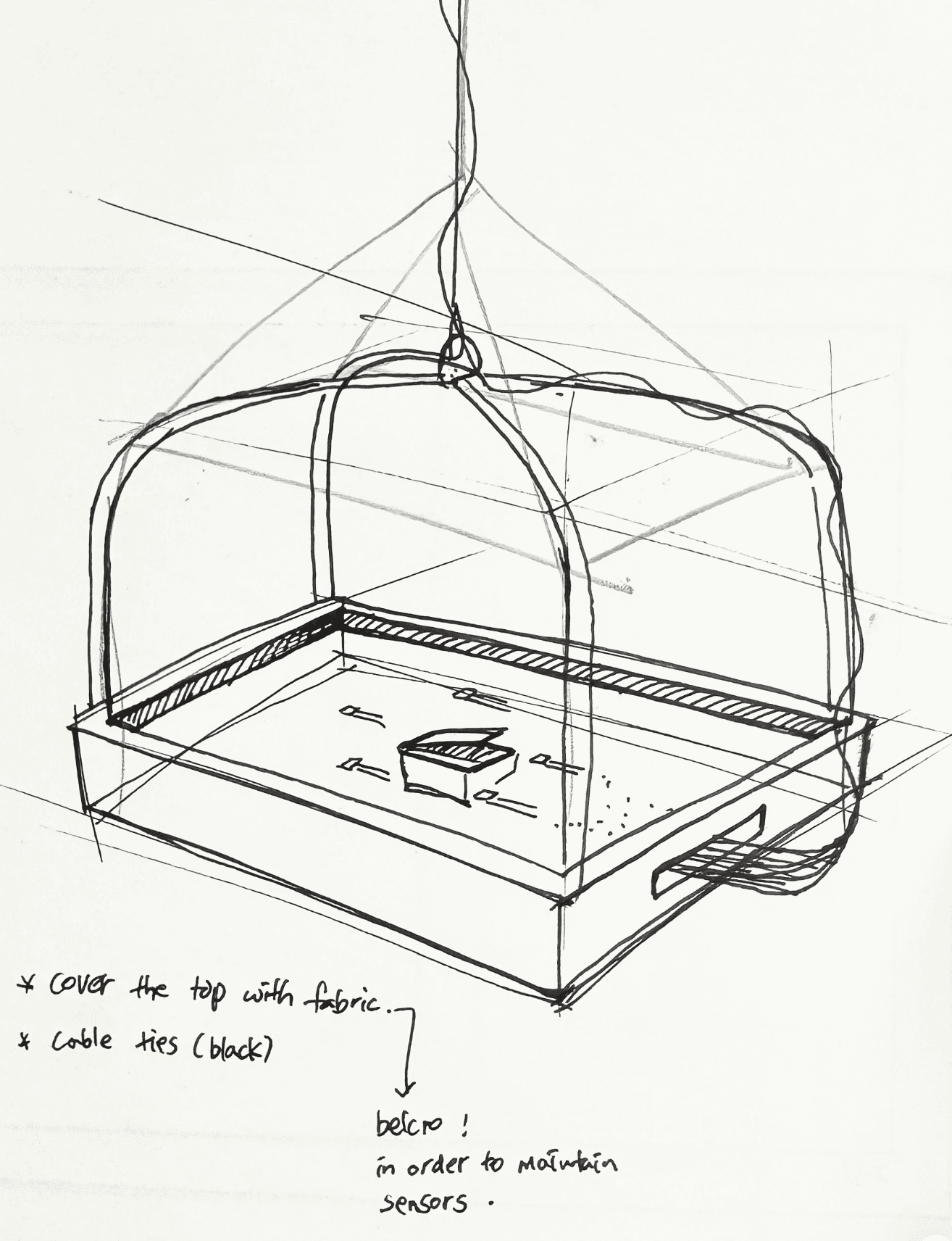
Figure 2.3. Tray design sketch
1) Electronics
The most important decision was choosing which motor to use. Three key requirements shaped this:
The motor needs to be strong enough to carry the rock, tray, phone, and arm structure. Torque was calculated using:
Total torque = (rock weight × distance) - (phone side weight × distance)It needs to be self-locking when unpowered, so the arm structure doesn't tilt and fall towards the rock side when the power is off.
It needed precise angular control in both directions.
Taking all of this into account, and with a helpful suggestion from Rob, the module leader, I chose a geared stepper motor (Figure 3.1).
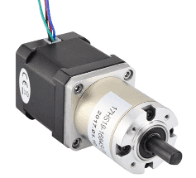
Figure 3.1. Lorem Ipsum
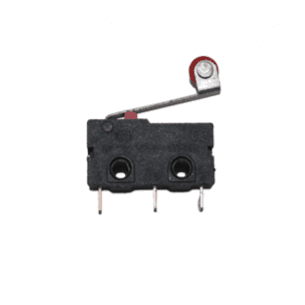
Figure 3.2. Lorem Ipsum
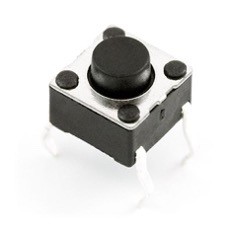
Figure 3.4. Lorem Ipsum
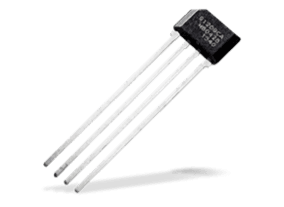
Figure 3.3. Lorem Ipsum
To apply magnetic values and determine how much the motor should move, I used a linear Hall effect sensor. Default readings sat between 510 and 525 with no magnetic object nearby, and shifted up or down depending on the polarity of a magnet. Testing with an iPhone 15 Pro, the most extreme value change was over 100 near the centre of the iPhone.
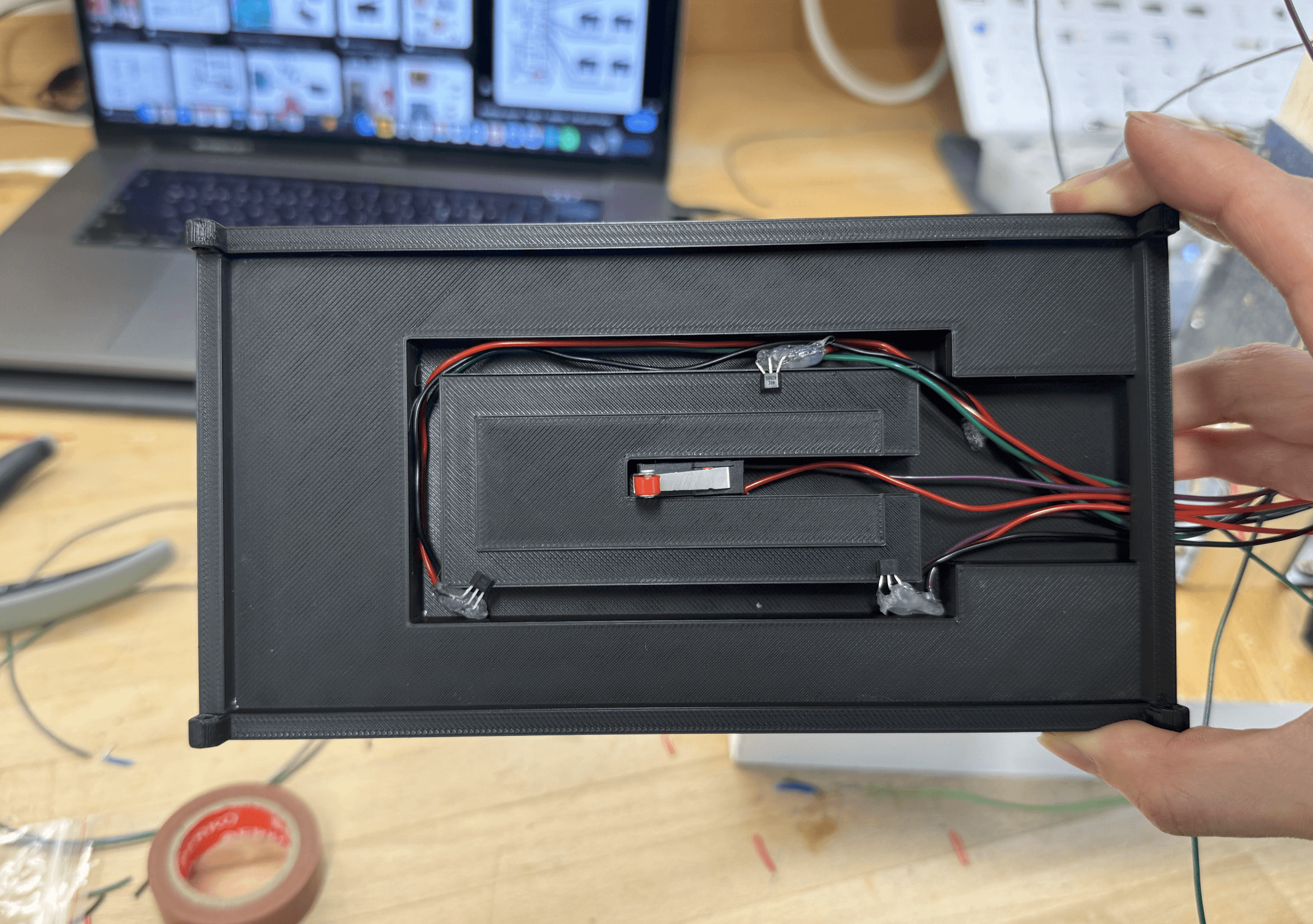
Figure 4.1. Lorem Ipsum
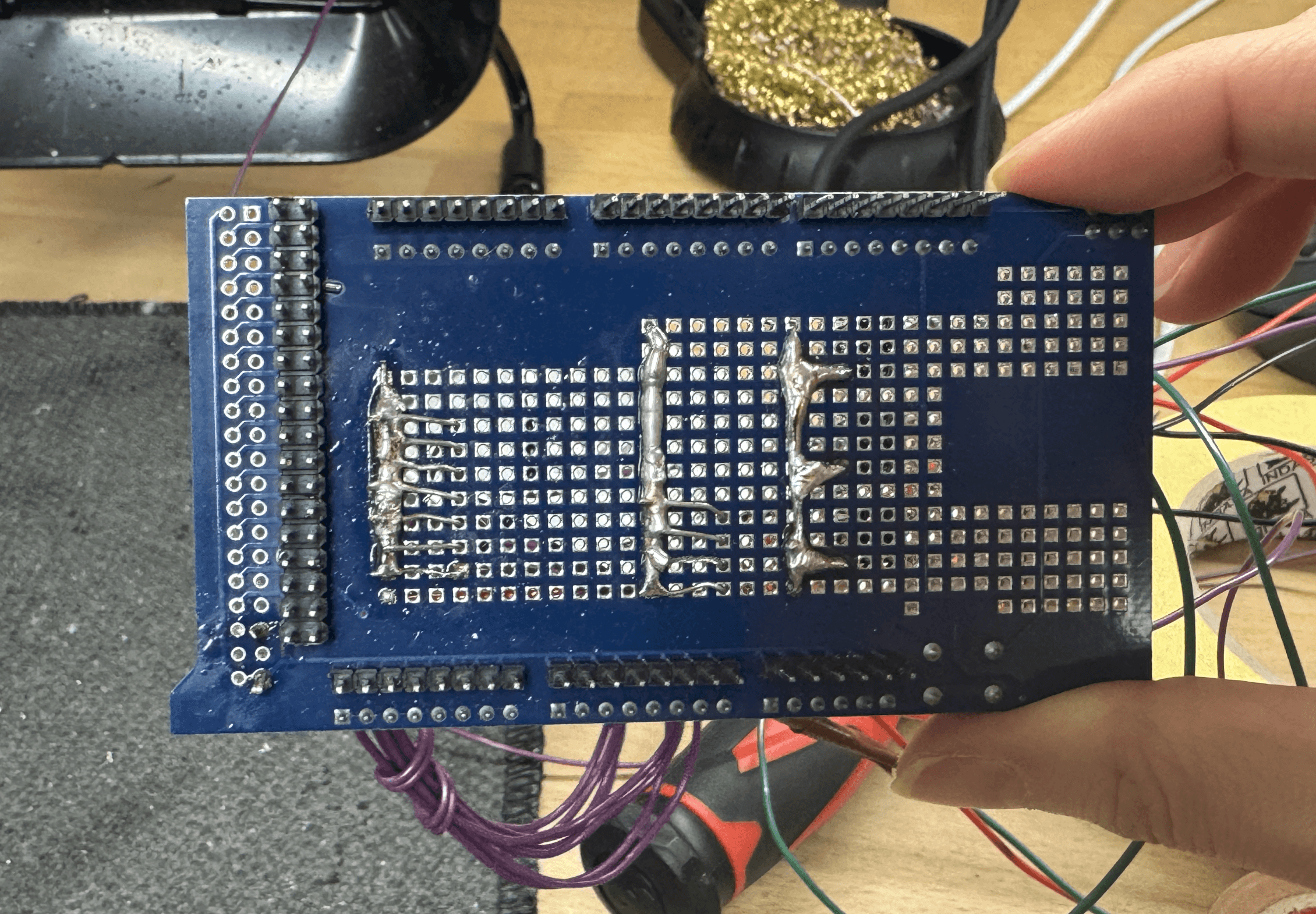
Figure 4.2. Lorem Ipsum
I also added an Endstop switch as a trigger for phone placement, and as a fallback in case no magnetic value change is detected, ensuring the scale responds regardless (Figure 4.1). For initial calibration, three buttons allow manual adjustment of the motor position: left, right, and confirm.
All connections were soldered onto a Prototype Shield board (Figure 4.2), which was plugged directly into an Arduino Mega.
2) Structure
Planning and building a structure capable of bearing significant weight proved more challenging than the electronics. I wanted to create something industrial and raw, yet sculpturally considered. I drew on the visual language of the Bagger 293 whilst ensuring the structure could function as a working scale.
The build began with a long timber piece as the main upright. Two pillow block bearings were mounted on top to fix a shaft in place, and this shaft was connected to the motor via a coupler (Figures 5.1, 5.2).
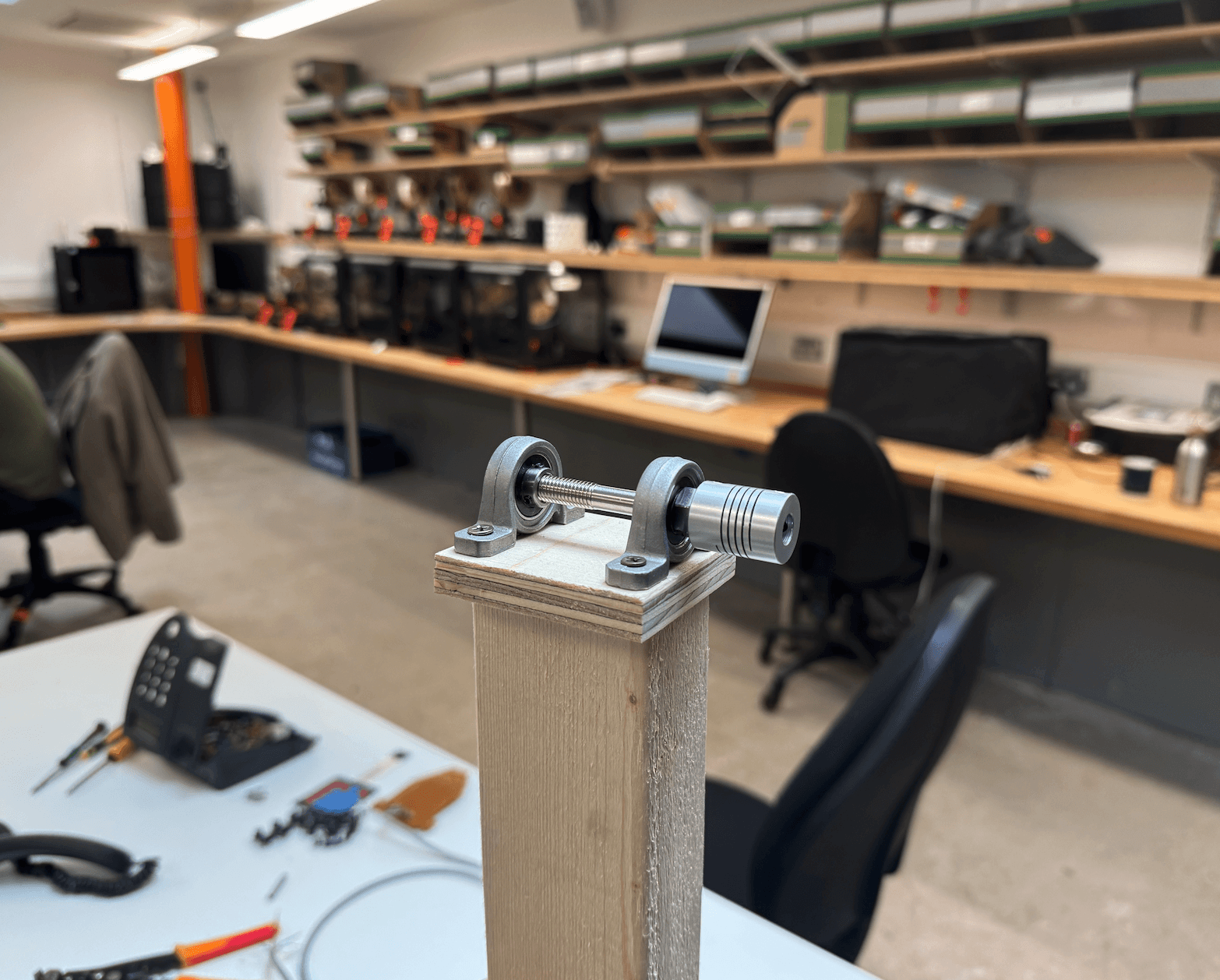
Figure 5.1. Bearings and shaft installation
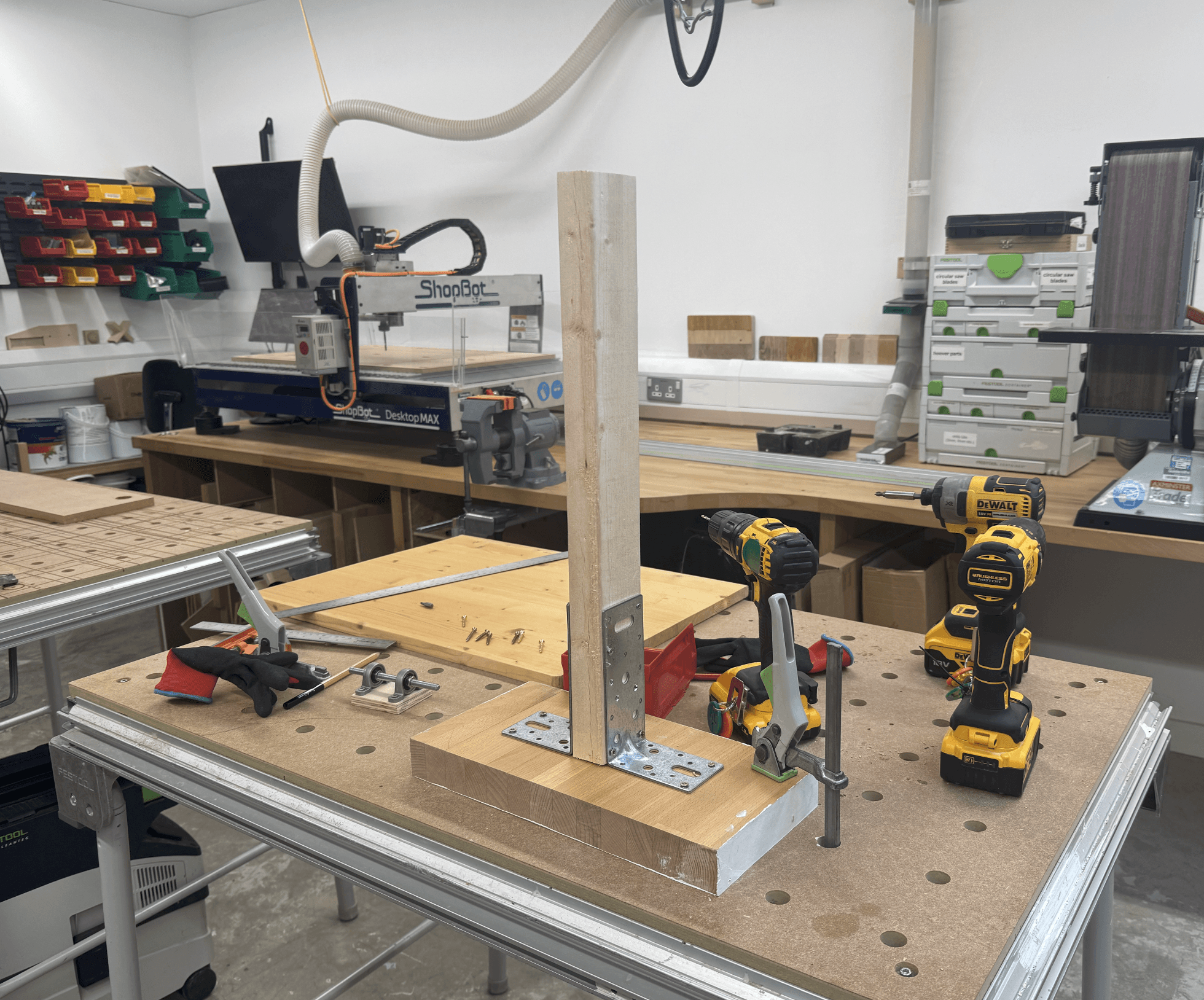
Figure 5.2. Main timber stand building
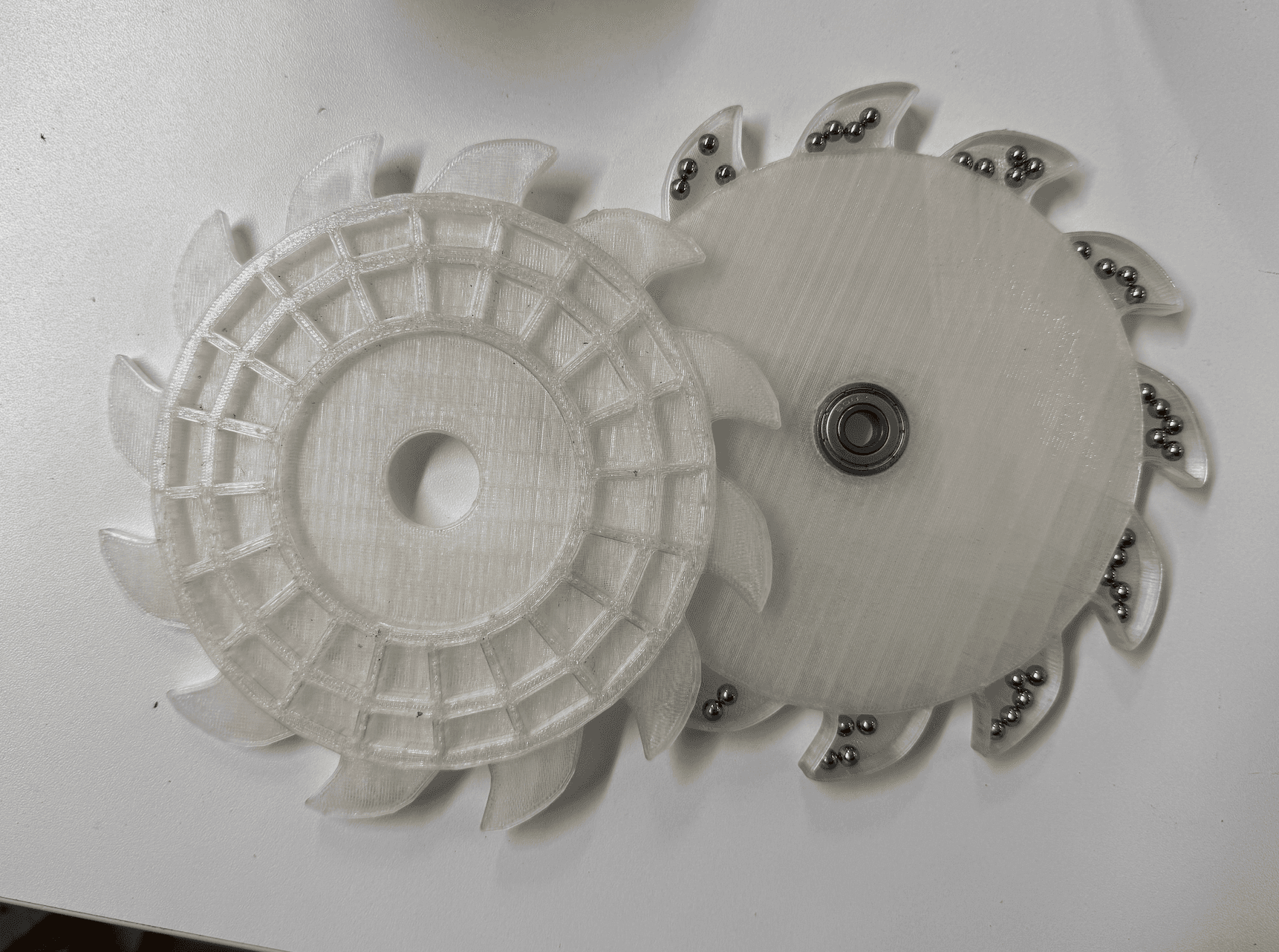
Figure 5.4. 3D print piece and steel balls inside
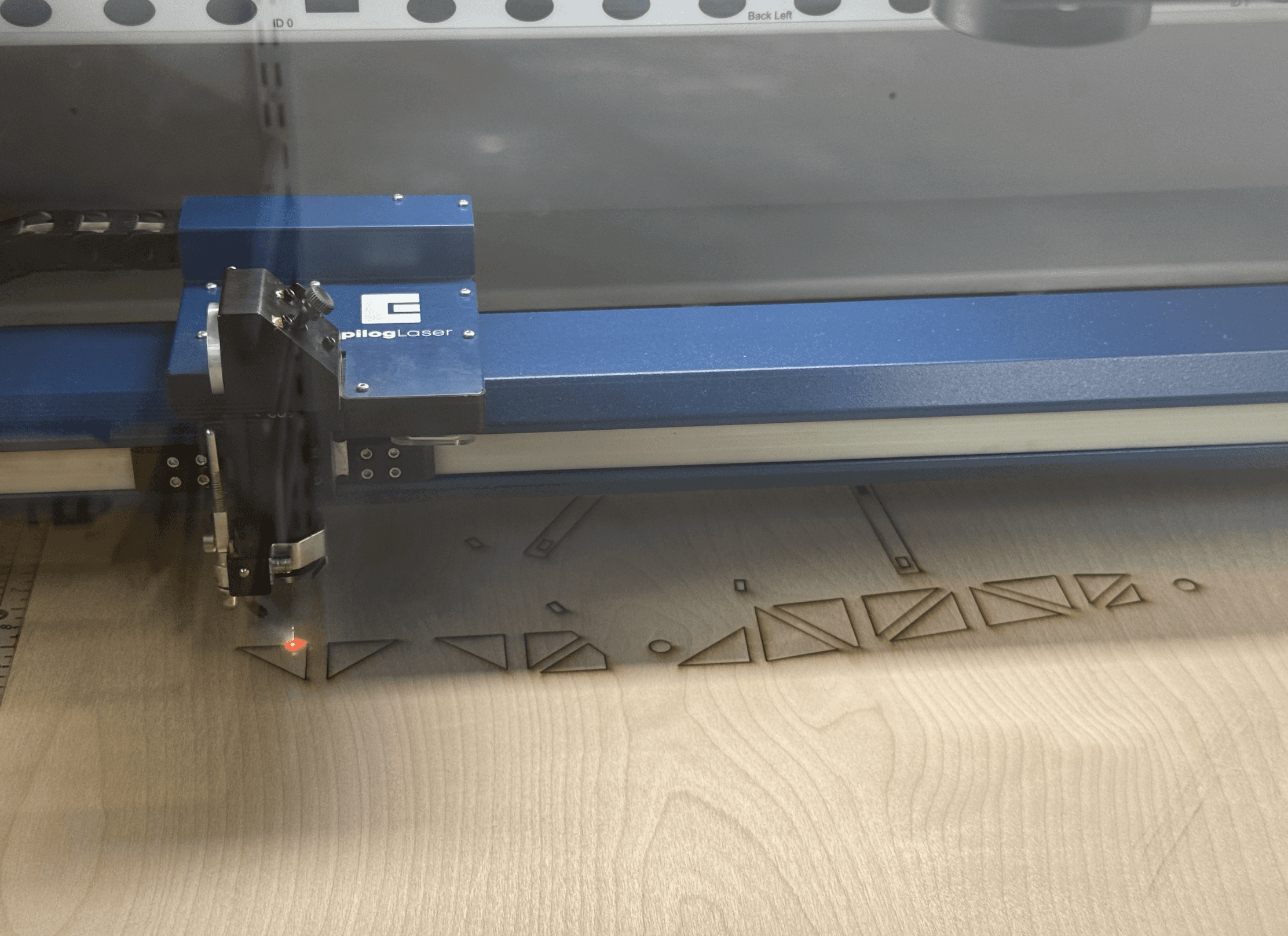
Figure 5.3. Laser Cutting of the arm
The arms holding the rock and tray were designed in Rhino 3D and laser-cut from 6 mm plywood (Figure 20). On the rock side, 3D-printed bucket-wheel props rotate slightly as the arm moves up and down. Steel balls were placed inside the buckets to produce a satisfying sound and to shift weight naturally, without requiring an additional motor (Figure 21).
The final assembly brought all these parts together using steel brackets, bolts, and nuts, with careful attention to weight balance and movement.
3) Code
The control code was written in C++ using the Arduino IDE, making use of the AccelStepper library (waspinator, 2024). The programme runs across three states.
On startup, the system enters Calibration Mode, which allows manual adjustment of the stepper motor to its initial position. Pressing the confirm button moves the system into Standby Mode. When a phone is placed on the tray, the Endstop switch value changes from 1 to 0, triggering Measuring Mode. The system reads all Hall effect sensors for five seconds, identifies which one shows the greatest change from its default value, and uses that reading to determine how far the motor should move. After five seconds, the arm moves slowly to its target position. When the phone is removed, the switch resets to 1, the motor returns to its initial position, and the system returns to Standby Mode.
4) Issues
One structural problem only became apparent after fabrication was complete. The point where the arm connects to the shaft, which in turn connects to the motor, was not designed to handle the force properly. Under load, the plywood rotated independently of the shaft, sliding around the bolt without transmitting torque. This happened because the shaft hole was circular. It should have been hexagonal, allowing a nut to be seated inside and the angled faces to lock the arm in place.
A second issue was that the 3D printed motor bracket was not rigid enough to resist vibration and the load. The fix required extending the bracket so it could be screwed into the steel bracket at three points, holding the motor firmly without allowing any rotation of the motor body.
The scale currently works without issue, but these structural weaknesses would likely cause problems if the installation were to run continuously over an extended period.
Reflection and Future Development
Overall, the project came together well within the given timeframe. From the outset, I prioritised planning and rapid testing at each stage, moving quickly from concept to prototype, which helped me catch potential failures early and avoid larger problems down the line. The core mechanism works as intended: visitors place their phone, the scale responds, and the conceptual inversion is communicated clearly through movement.
That said, the structural issues described earlier are the most obvious area for improvement. The arm-to-shaft connection and the motor bracket were both points of weakness that only revealed themselves under real conditions. In a future iteration, these would be addressed from the start by designing a hexagonal shaft hole and a more robust, multi-point bracket at the 3D modelling stage.
On the electronics side, I would like to expand the Hall effect sensor array to better accommodate different smartphone models. Different phones carry their magnetic components in different positions, meaning the strongest sensor reading shifts depending on the device. With more sensors distributed across the tray, the system could reliably detect a wider range of handsets, something that has not yet been properly tested. More extensive user testing with varied devices would be essential before any public-facing version of the installation.
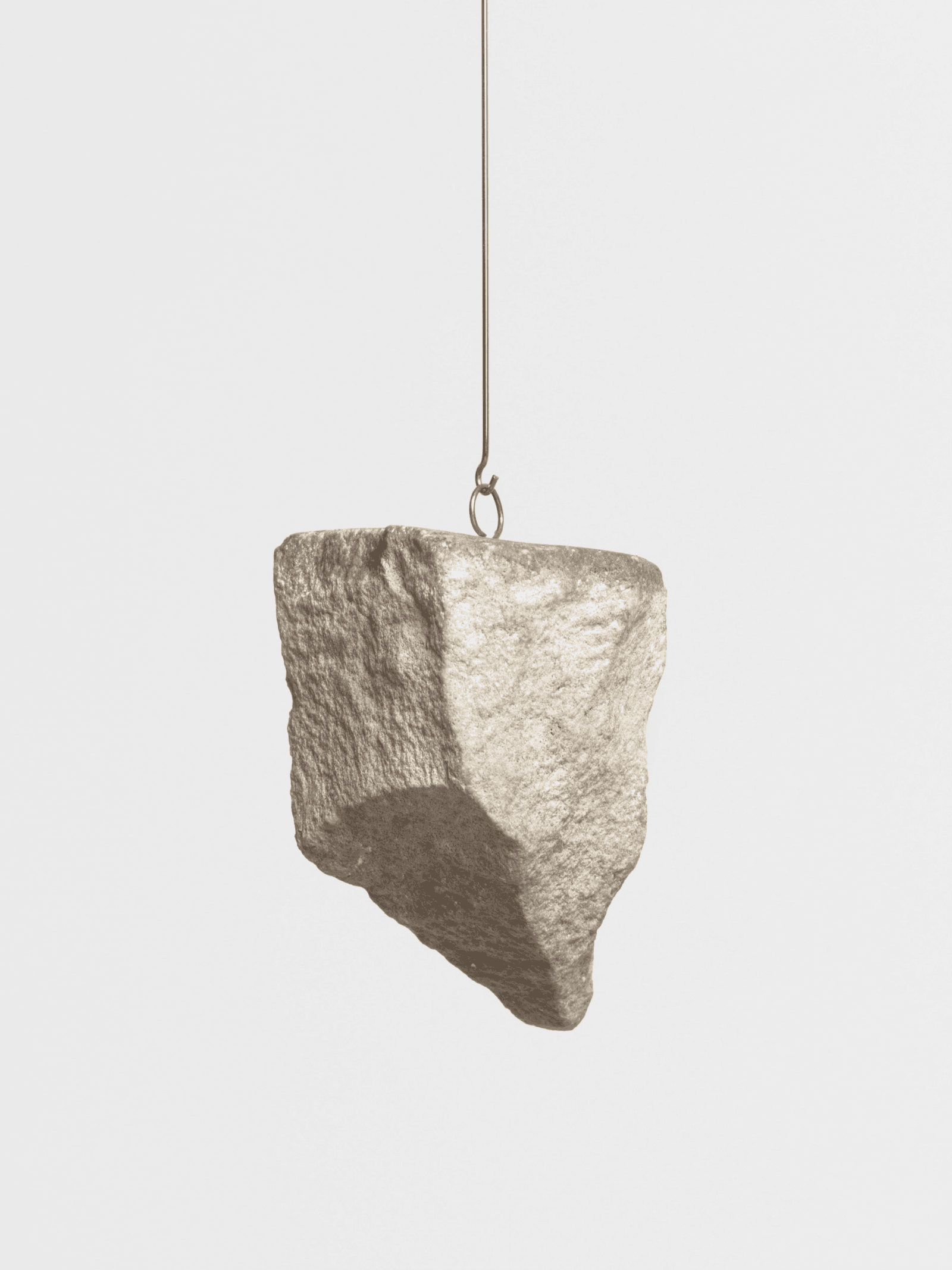
Figure 6.1. Hanging rock

Figure 6.2. Cement and steel
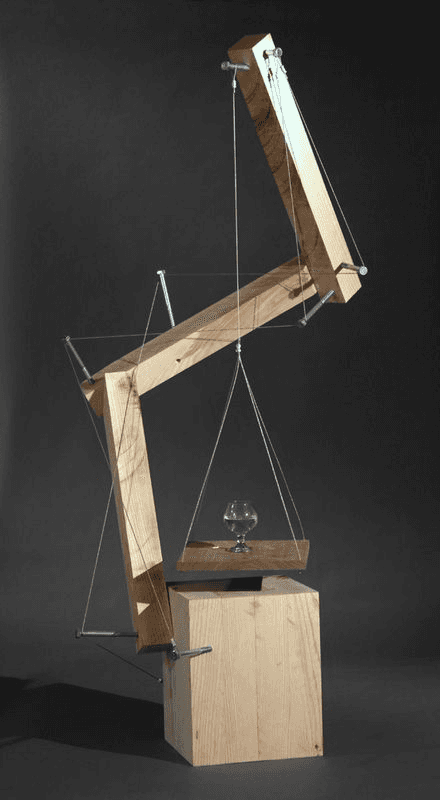
Figure 6.3. Wood with wires
References
Adika, N. (2025) ‘Smartphone and Social Media Usage 2025’, GeoPoll, 31 July. Available at: https://www.geopoll.com/blog/smartphone-and-social-media-usage-2025/ (Accessed: 25 February 2026).
Bratton, B.H. (2015) The stack: on software and sovereignty. Cambridge, Mass. London: MIT press (Software studies).
Critical Minerals in Smartphones (no date) SFA (Oxford). Available at: https://www.sfa-oxford.com/knowledge-and-insights/critical-minerals-in-low-carbon-and-future-technologies/critical-minerals-in-electronics/critical-minerals-in-smartphones/ (Accessed: 20 March 2026).
‘Minerals in a smartphone’ (no date). The Geological Society of London. Available at: https://www.geolsoc.org.uk/~/media/shared/documents/education%20and%20careers/Resources/Posters/Minerals%20in%20a%20smartphone%20poster.pdf?la=en.
waspinator (2026) ‘waspinator/AccelStepper’. Available at: https://github.com/waspinator/AccelStepper (Accessed: 22 March 2026).