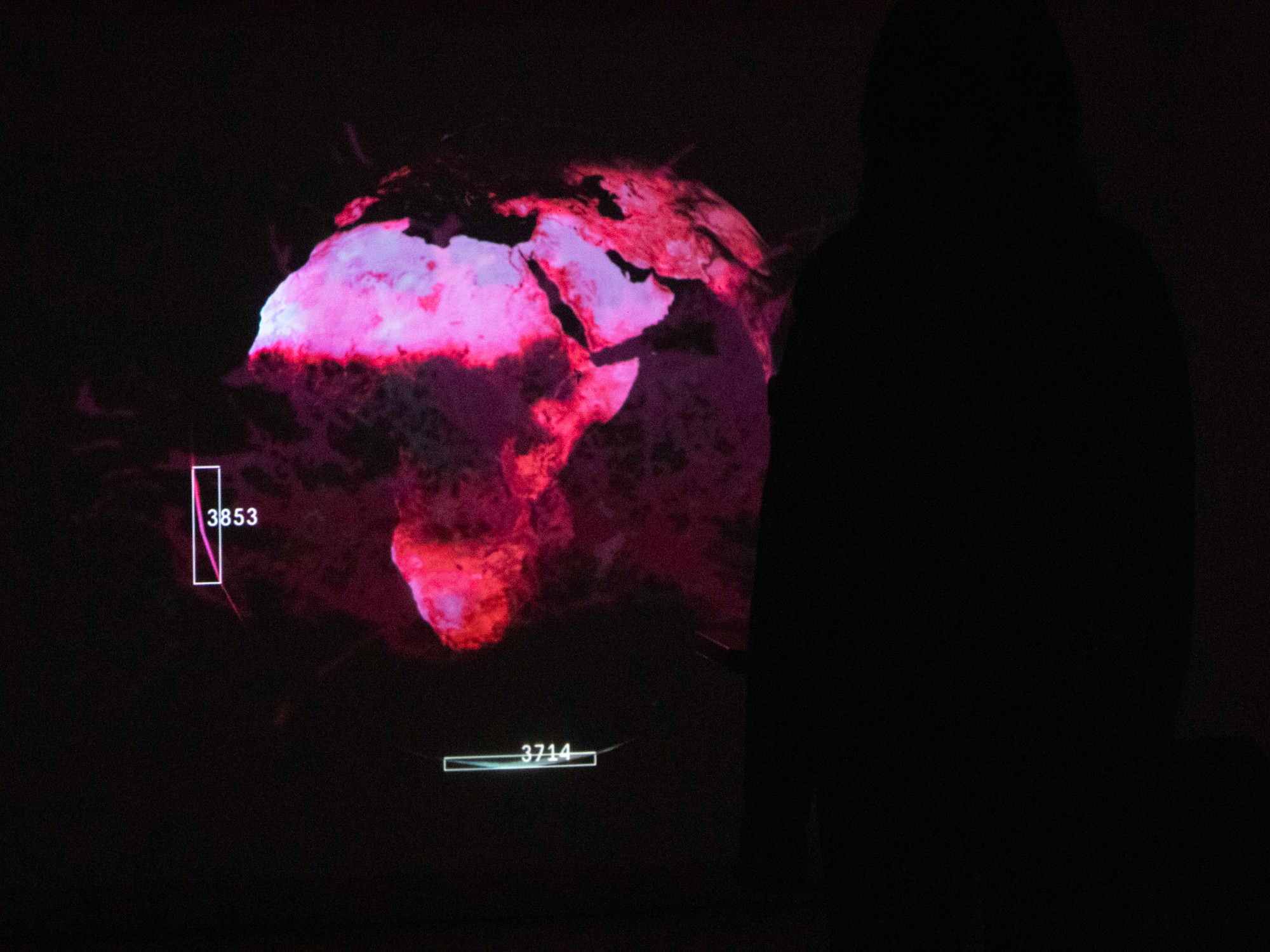
The Three Percent:
A drought feedback system
16 December 2025
How can we make visible the invisible water crisis through a hunman-plant feedback system that embodies humanity's paradoxical role as both the sustrainer and destoryer of nature?
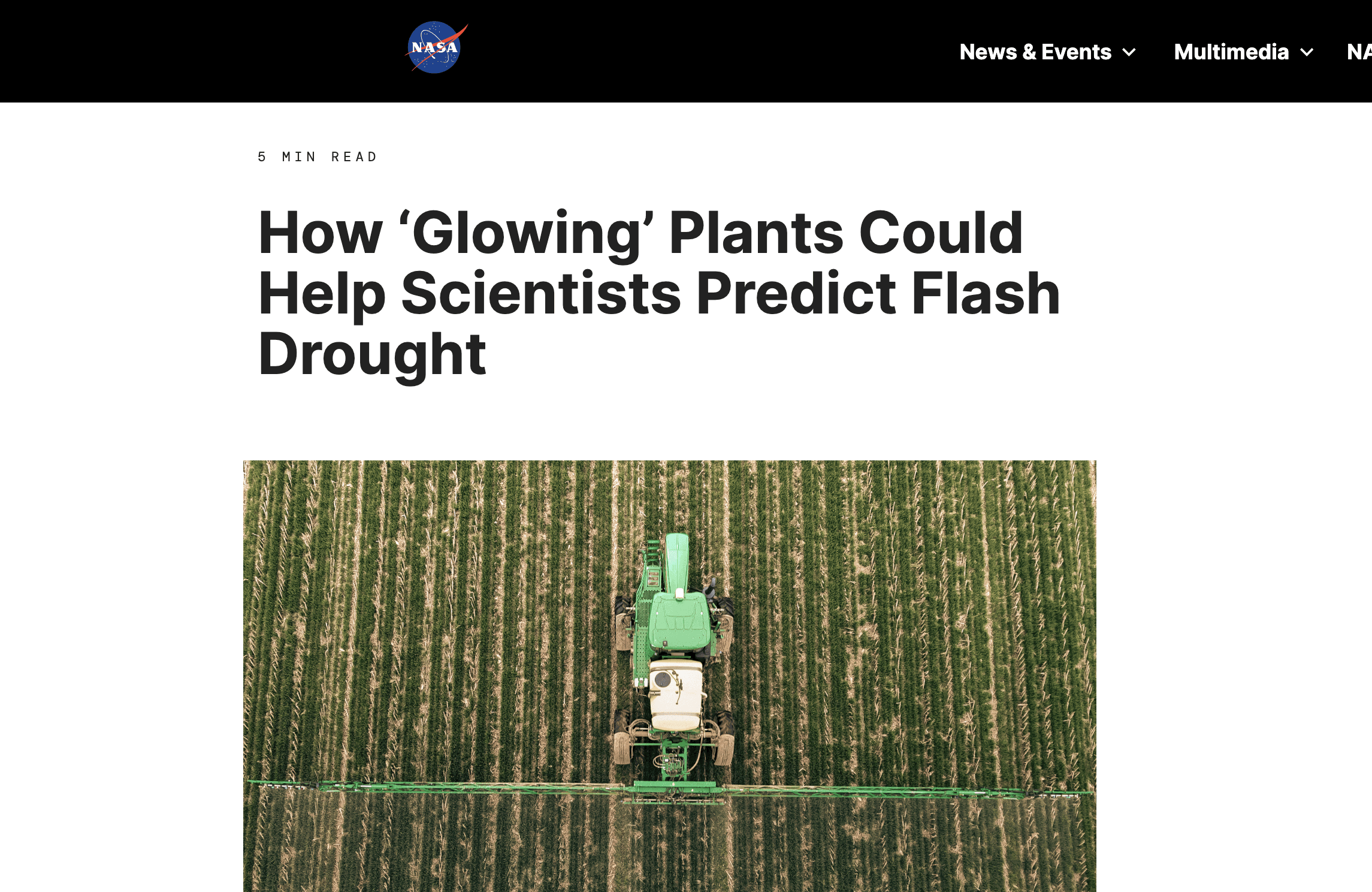
NASA article about Solar-Induced Flurescence (SIF)
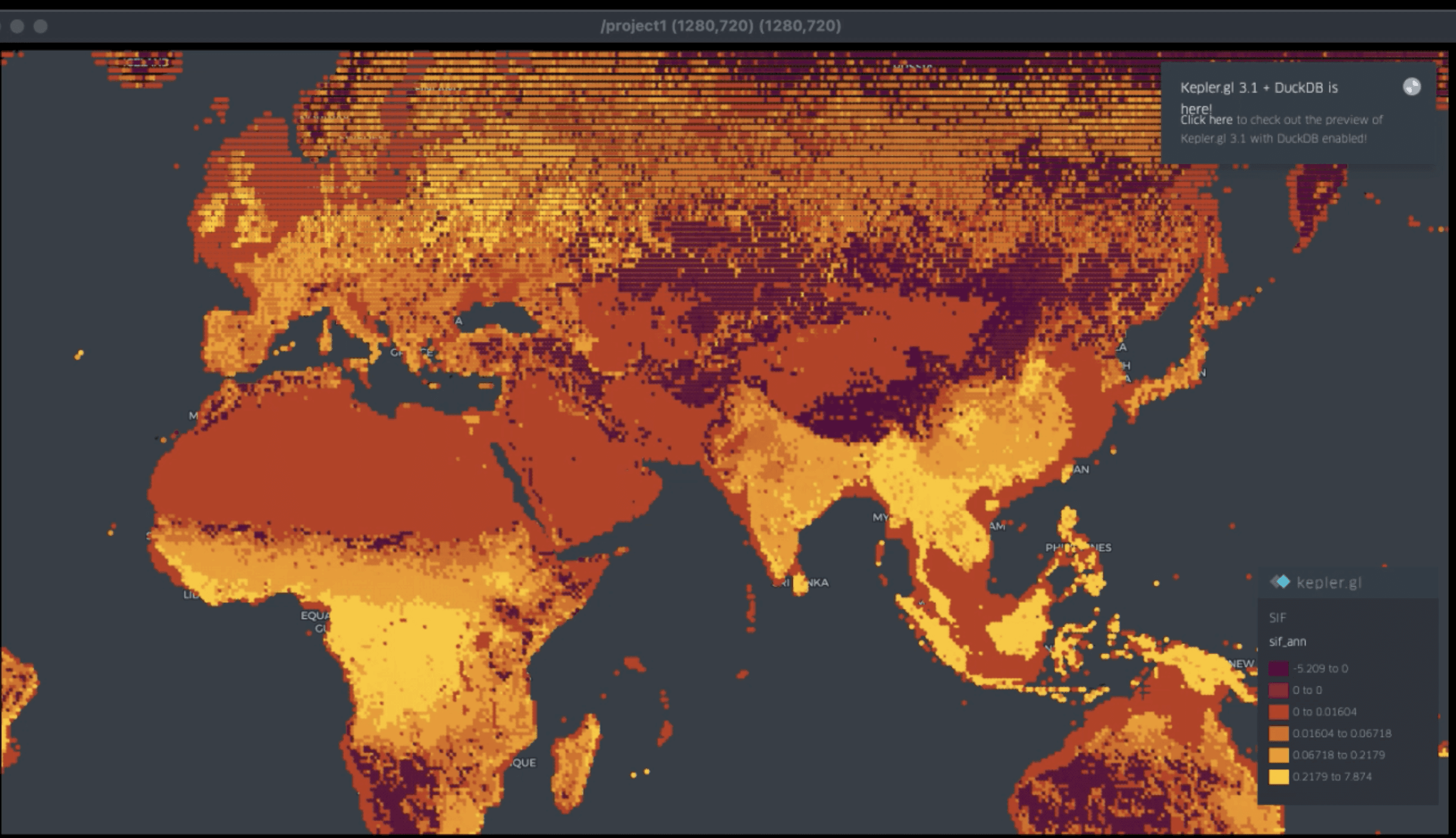
Visualisation of NASA dataset collected by Orbiting Carbon Obsevatory-2 (OCO-2)
Consuming water everyday often obscures the fact that drinkable freshwater is critically scarce globally. Water is crucial for basic human needs and supports food, energy, and economic systems. Nevertheless, rising demand driven by population growth, alongside accelerating human impacts on the climate, is intensifying droughts (OECD, 2025). Harvey (2023) states that global freshwater demand will outstrip supply by 40% by 2030. Meanwhile, geopolitics means water scarcity disproportionately affects poorer, vulnerable groups (UNESCO, 2020). Strikingly, only 3% of the Earth’s water is freshwater (NASA SVS, 2024). How are we treating The Three Percent? Through this research, we sought to understand how the phenomenon of water scarcity is entangled across ecological, social, political, and cultural contexts.
By gathering data, we examined what has occurred in the past and what is unfolding today. Although advances in science have made rainfall and drought somewhat predictable, the case of Cape Town’s “Day Zero” illustrates how severe droughts in contemporary society can affect entire cities, shape policy responses, and reveal how communities attempt to overcome such crises (Welch, 2025). As the crisis deepens, climatic conditions are becoming more extreme and unpredictable. In this context, we focused on recent NASA research. This highlights that, during photosynthesis, plants convert sunlight into chemical energy and release a faint light known as solar-induced fluorescence (SIF). Although invisible to the human eye, this glow has been detected by Orbiting Carbon Observatory-2 (OCO-2), revealing that changes in plant activity can occur six to twelve weeks before the onset of flash drought (NASA, 2024). Collecting satellite images and open-source data documenting SIF not only enabled us to use creative technology as a form of forensic epistemology, but also encouraged us to reimagine the capacities of plants. Plants, often regarded as passive and unconscious, have long been subjected to human domination. Yet recognising non-human intelligence and learning from how they perceive the world may allow us to co-inhabit this planet more equitably. Bridle (2023, 69–70) argues that realising we share the world with animals, plants, and diverse others is crucial. Acknowledging a more-than-human world enables a fundamentally different mode of thinking, supports our navigation of the Anthropocene (Crutzen, 2002), and challenges human exceptionalism.
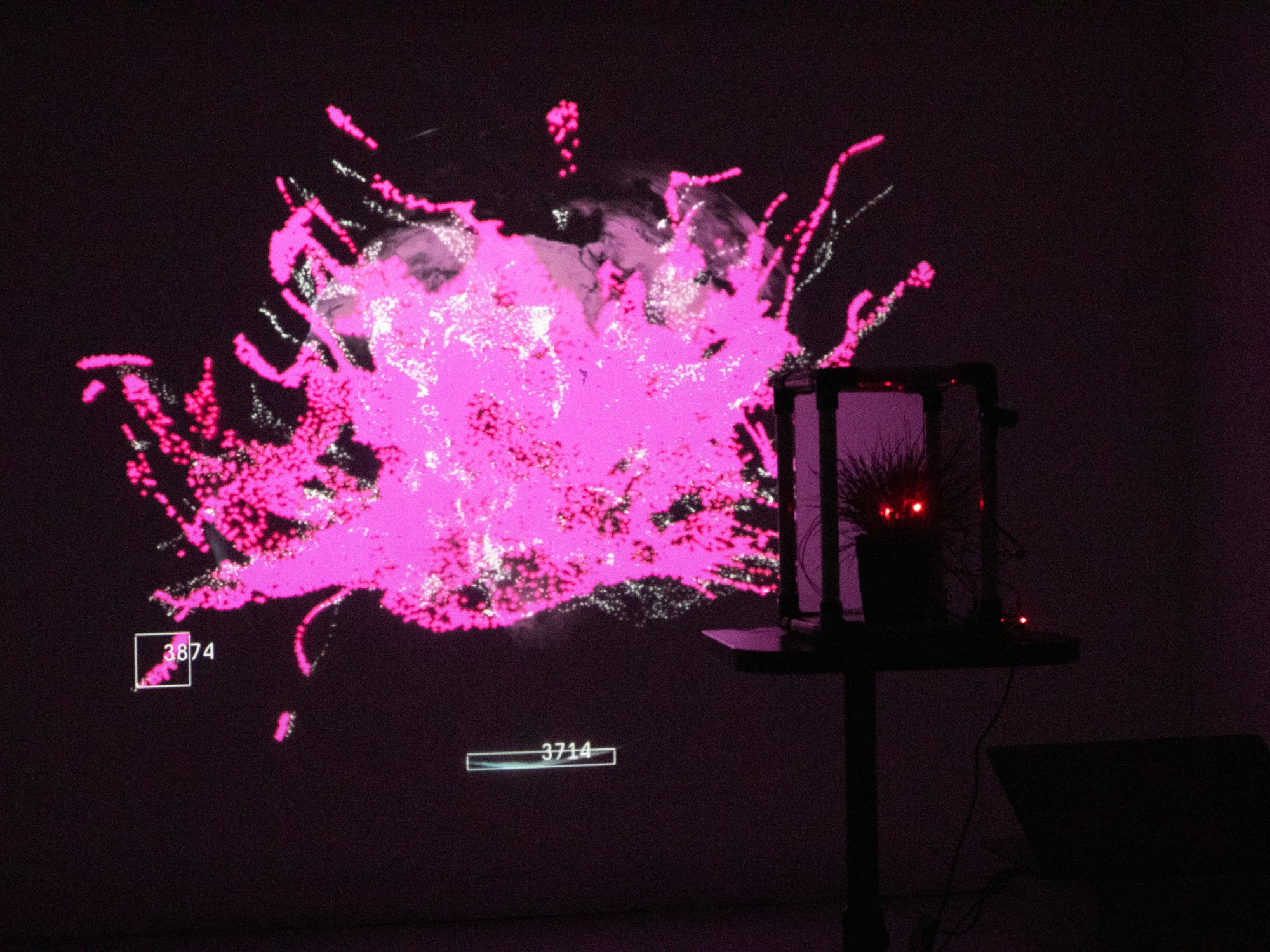
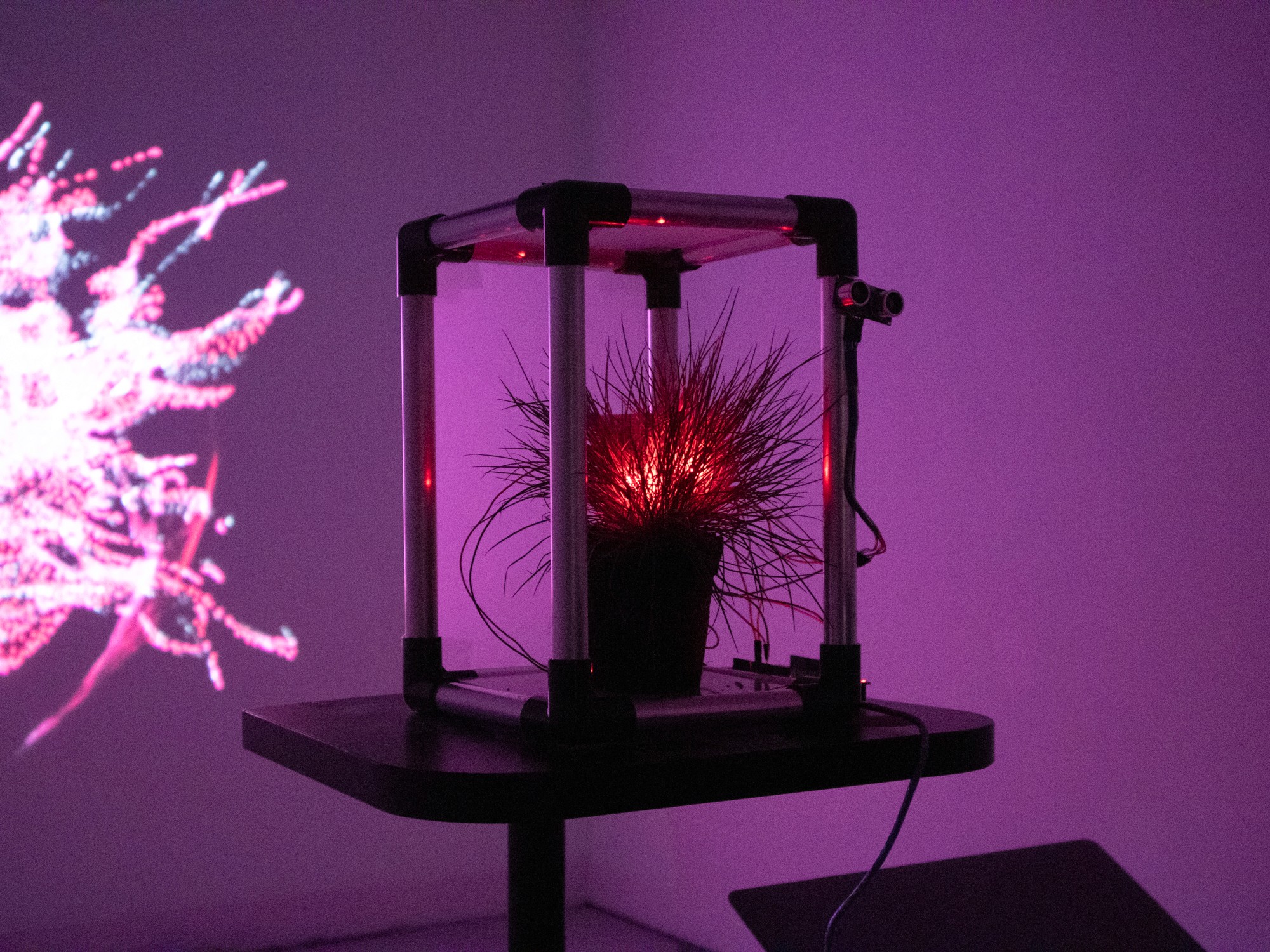
Building on insights drawn from the data collected in our research, we asked how we can make visible the invisible water crisis through a human-plant feedback system that embodies humanity’s paradoxical role as both the sustainer and destroyer of nature. In this context, we developed a prototype using a grass plant that often thrives in arid environments yet shows a distinct response under drought conditions. The prototype positions the plant as if it were confined within a cage, subtly referencing human control and colonial attitudes toward non-human life. An ultrasonic sensor connected to an Arduino, accompanied by a flashing red LED, is integrated into the installation. As viewers approach the plant, the LED begins to blink more rapidly as a sign of stress, while a 3D-scanned model of the grass plant reacts in real time. Through this interaction, we reveal the irony that carbon dioxide that human overproduce is essential to plants and a driver of climate change due to human activities.
Overall, by centring freshwater scarcity, the project reveals tensions around more-than-human relations, and invites reconsideration of how we inhabit a shared and interdependent world.